113 points by dv35z about 10 hours ago | 106 comments | View on ycombinator
coffeecoders about 8 hours ago |
sermakarevich about 9 hours ago |
Discussion on hn: https://news.ycombinator.com/item?id=48231575
Repo: https://github.com/sermakarevich/sddw
Slides: https://docs.google.com/presentation/d/1SjKXF7hkoqyiN9-3tBGY...
browningstreet about 1 hour ago |
I use Claude Code to initiate a project using Sahil’s ME skill pack and write a high-level spec to a Linear ticket. If/when I’m ready to work on that idea, I convert it to a project, decompose the top ticket into more issues. I also have Claude code add to each issue with deepseek, sonnet or opus tags based on which is most appropriate for the issue.
Then I fire up opencode and go through each ticket. Plan, then build. Every N issues I switch to opus and have it review the work done.
Enhancements and bug reports get filed in the project. Repeat as necessary. I work pretty sequentially. I’m quite happy with the operational success of my projects. They’re all being used.
I’ve expanded this process a few times but this baseline is where things shrink to. Sometimes I use open chamber but opencode cli works for me.
athrowaway3z about 6 hours ago |
- Minimal tooling - Minimal system prompt - Folders + files + text
AI driven development has turned the whole development job into knowing what questions to ask + complexity reduction.
First ask the model how to do something / what options there are to do something - not just to do something. Creating moments to teach that is a challenge in itself.
After its answered go tell it to do the thing.
If they're serious though, the next step is to teach them to always ask if there is a simpler alternative with fewer dependencies.
Anything with a too magical UI is going to give them the wrong 'model' in their mind on how to think about the tool.
A bit of a hidden aspect many people seem to miss, the tone you take with the model is absolutely critical. Ask a bunch of psychology questions before having it write javascript or propose a tech stack is going to get you different results.
Finally, the semi obvious hack (and which something like claude will do automatically when in team mode) - have the model talk to another instance of itself. The model can translate your ramblings into coherent specs in the right tone and feeding that back into itself in a new session gets you the good results. Its also part of why the "first write a plan" works because it fills the context with the right tone and clear instructions.
aabdi about 9 hours ago |
My way is to just run a giant AI agent factory engine and make the agents full flow do everything. (plan long term, write prd, task, review).
Here's ~4000 commits in last month as an example, i have about ~10k ish including private/work stuff? https://github.com/portpowered/you-agent-factory/commits/mai...
The premise when you get to full automation generally is you go full industral engineering:
1. watch overall flow, improve process via continuous improvement
2. work via checklists and gates.
3. replace process with mechanisms as much as possible (code > agents)
4. optimal throughput is continual testing and iteration (CI, CD), coverage, full e2e tests, mock everything, general best practices really.
decent blog: https://openai.com/index/harness-engineering/
general points:
- build lots of linters
- document literally everything (arch, prd, best practices in repo)
- too many agents at the same time makes lots of code conflicts, so need to consider architecture of code how to maximize concurrency.
Charlieholtz about 7 hours ago |
My flow is something like: - Create a new workspace for a specific bug/feature - Ramble into the input box. I use a goose neck microphone and Spokenly (with Parakeet as the model ) for local speech-to-text - Hit enter! I don't use plan mode. - Ask for a review from a different model (⌘⇧R) - Create a PR and run a /babysit loop - Run a local version of the app and click around, do a human review. If the LOC are negative we don't pay much attention to the code. If it's positive we do - Merge!
I often have 3-5 workspaces running like this. There's lots of room for improvement but it's been working quite well for me.
RivoLink about 8 hours ago |
- Claude Code
- flow: https://github.com/RivoLink/flow
- leaf: https://github.com/RivoLink/leaf
- GNOME Terminal
It's a pretty terminal-first workflow.
dv35z about 2 hours ago |
https://codeberg.org/jro/Knowledge/src/branch/main/2026-06-0...
Contributions & improvements are invited and welcome - thank you!
moezd about 7 hours ago |
That way the model doesn't go about "let me grep this specific pattern across a million files again and again" loop and burn your entire weekly budget by Monday at noon.
I'm also curious if anyone has done something cool with memory and context management that doesn't require a custom llama.cpp implementation. I also don't have the heart to let the swarm do it end to end, because LLM generated code with less capable models really does smell, no amount of spec driven or Claude.md filled style guidelines seem to fix it.
dempedempe about 8 hours ago |
Each phase writes to `./.agents/plans/{plan-name}/` in the project root. All in Markdown. That way, the flow is agent-agnostic. Each phase artifact is immutable after being written.
More details:
First, I put all the information that I have (documents, client statements, any code, my own summary, etc.) into a document. Which I pass to the discovery planning skill.
The discovery phase more formally defines the project in terms of functional requirements, non-functional requirements, constraints, risks, and assumptions. This might take a few passes to get everything nailed down.
After that, I being a implementation planning phase using the discovery artifact (`discovery.md`). We define the work in terms of phases, where each phases has various tasks associated with it (all checkboxes). Again, usually requires a few passes.
After that, I have a clear idea of the work needed and can send an estimate to the client. Or, if it's a personal project, get started actually building it. I have another phase for actual implementation.
Verification and review are similarly defined. They can be done by any agent.
delduca about 8 hours ago |
sajithdilshan about 8 hours ago |
Besides that I have a collection of custom skills (plan for JIRA tickets, github PR creation, code review, etc), a set of MCPs (most are for internal tooling) and most of the time I use Claude Code.
nimonian about 7 hours ago |
For each new feature, I open a worktree, spar with Claude to work up a gherkin spec with @todo on each story. Each agent pushes commits to a WIP PR in GitHub where I review and leave comments or questions. Once the spec is done we mainly interact on the PR. @todo becomes @wip and @done as the agent progresses. I really like gherkin for agentic engineering, it's very clarifying.
I have about 2-4 agents running at a time. Large test suite, linters and formatters enforced on push.
Greenpants about 6 hours ago |
First I tried OpenCode but they unexpectedly make external requests (!) even when using Ollama (I noticed when Ollama wasn't properly connected and I still got a title generated).
So I settled for Pi, but I strongly disliked the idea that the agent could, at any point, decide to delete files or exfiltrate .env secrets. So I created Picosa (https://github.com/GreenpantsDeveloper/Picosa), containerizing and sandboxing Pi, with firewall rules such that it could only ever reach the local network (for Ollama), scoped by just the current working directory, and nothing else. Combined with Qwen3.6:35b, it works surprisingly well, and I could ask it to improve itself when run on its own repository.
avgDev about 7 hours ago |
I brainstorm with it, create documentation, and generate code. Then review, test and profit.
yogibear678142 about 8 hours ago |
lagrange77 about 6 hours ago |
TBH, i'm wondering why i'm the only one saying he's using VSCode with GH Copilot. Isn't this the most frictionless tooling for an 'agentic engineer'? I get state-of-the-art LLMs while it's fully integrated into my IDE.
I still don't fully get what Claude Code or GH Copilot CLI would bring beyond that, since the Copilot plugin does also have CLI access.
jjcm about 6 hours ago |
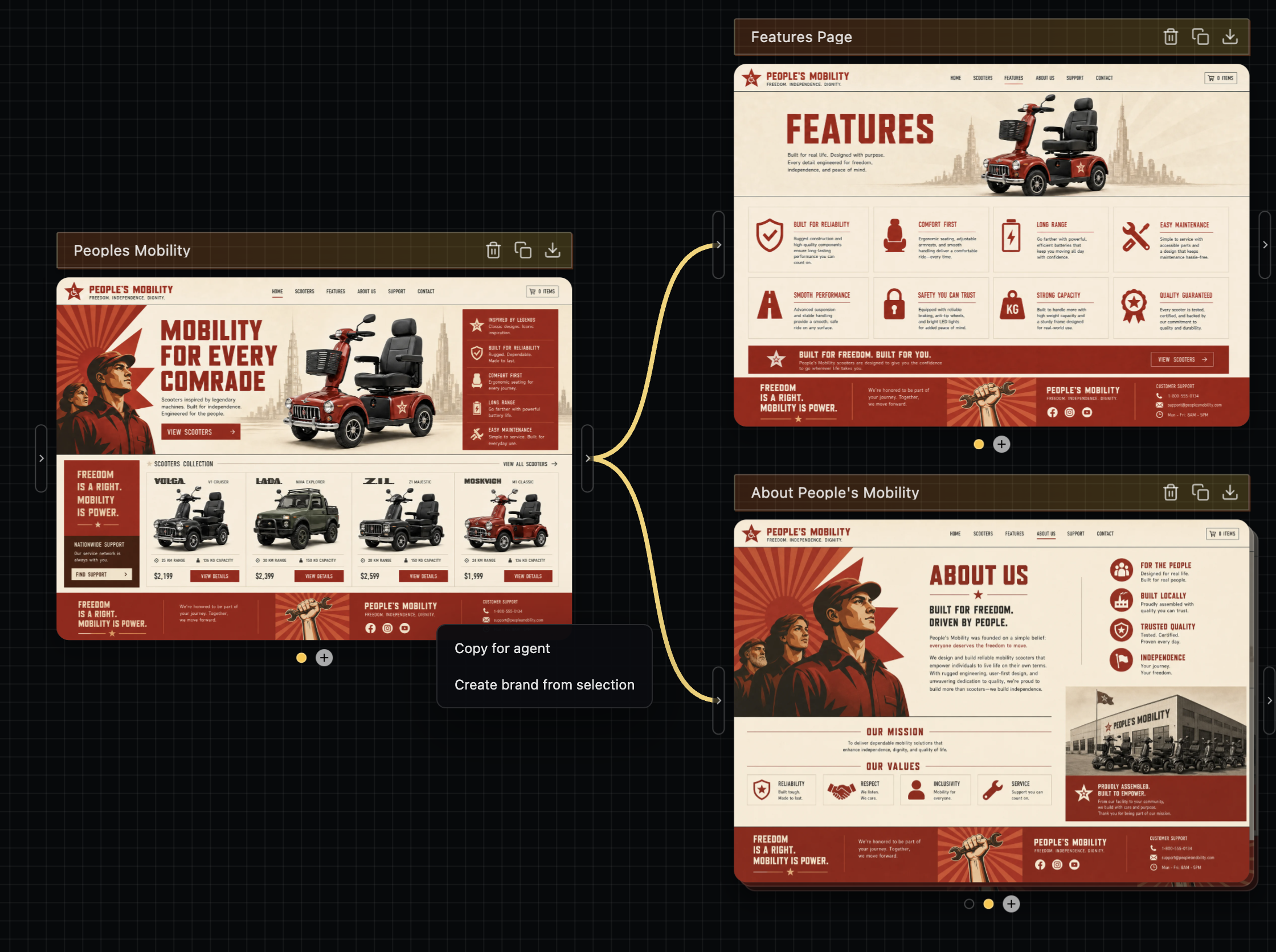
RE this one, I highly recommend doing image->code as the flow here. Codex's sites feature is doing this under the hood - it's rendering an image first with gpt-image-2, then building from it as a reference.
You can use gpt-image-2 directly for this, though if I can plug my own stuff diffui.ai it's exactly what I made this for. It'll make it easier to do multi-page flows with the same style easily, then you can hand off the designs to your agent, ie https://image.non.io/6e1f98ad-4c79-4735-9932-b0d5cca9be98.we...
ramoz about 7 hours ago |
I review agent messages, some specs/plans, and conduct local code reviews with Plannotator [1].
For skills, I have a bunch of custom ones for my own workflow. and for public skills I really only use the interrogate skill from cursor's lauren [2].
Key workflow stuff:
- Almost all work I do gets done in a git worktree.
- ghostty + Mac OS gives me all the organization I need for multi-agenting
- turn off all agent memory, this has only ever caused problems for me.
[2] https://github.com/cursor/plugins/blob/main/pstack/skills/in...
blfr about 7 hours ago |
https://antigravity.google/product/antigravity-2
Not really a recommendation since I don't have a good benchmark of these tools but Antigravity's /grill-me feature where it asks you a bunch of questions like a system/business analyst and gives you an implementation plan for review (and can actually change it further) is pretty cool and it is certainly fit for what you intend.
Heard also good things about Zed and am testing it right now. So far I managed to... edit a json.
c-smile about 7 hours ago |
Choice of AI "tooling" was by accident - typed something like "how to define copy constructor in D for custom structure" in Microsoft's Copilot in Edge browser that gives context for AI.
The answer was good enough for me and so I went with it further.
[1] D language HQ : https://dlang.org/
[2] AI-Assisted Development with D Language, Creating Sciter SDK: https://terrainformatica.com/2026/06/05/ai-assisted-developm...
Kuyawa about 8 hours ago |
Sublime Text and a DeepSeek plugin for file by file cosmetic fixes
Nothing else. With these tools I am building apps like never before in minutes instead of months
mg about 9 hours ago |
I can tick files in Vim, those get concatenated into a prompt. Along with a feature request. Plus an instructions file that tells the LLM how to reply. Plus my general "rules for good code" file, plus one "rules for good code" file per language involved, plus a project specific overview file. The LLM then answers with a list of changes it wants to make to the code. My tooling then applies those changes and I look at them via "git diff". If I like it, I commit. If not, I change one of the prompts and start the process again.
Instead of replying with code changes, the LLM can also decide to request more files. I wrote a little DSL for that.
I described the beginnings of this workflow last July:
https://www.gibney.org/prompt_coding
Feels like an eternity ago. I think I will write a new blog post this July and describe how the workflow has evolved over the past year.
throwaway888abc about 7 hours ago |
Currrent setup:
Zed + Terminal threads (love this!) + Remote machine
Devcontainers + Claude + Pi
[1] Zed https://zed.dev/
[2] Terminal threads https://zed.dev/blog/terminal-threads
[3] Pi https://pi.dev/
As sort of byproduct also replaced Alacritty + Zellij (i just don't have the need to use more, 3 weeks of new setup)
solumos about 9 hours ago |
I've found that converting stuff that's previously been very ops-cli heavy into very detailed skills has worked really really well.
I use Claude Opus 4.8 + Conductor as my daily driver
gottagocode about 9 hours ago |
Mostly Hand coded, using an agent in the browser (Claude / Corporate ChatGPT account) when necessary. I am aware we will fall behind using this methodology and have advocated for change, but I suppose it comes with the territory.
d0100 about 5 hours ago |
1. Pick the most complete project boilerplate (fullstack JS can easily introduce security bugs, SPA + API is best as cheap linting solves most problems)
2. Project skills (how to CRUD without mess)
3. Use worktrees for concurrent features, local session for conflicts
4. Local session for QA and refinement
I use Copilot and GPT 5.4
Managed to shorten pre-AI priced ongoing projects to 2 weeks or a month
Havoc about 7 hours ago |
1) Write half pager of markdown by hand - tech, architecture, features
2) Ask 2-3 LLMs from different companies to review for gaps & problems
3) Make LLM turn it into implementation plan with emphasis on modular phases
4) Repeat step 2 but on the implementation plan. Usually the 3rd LLM just goes yeah that looks fine
5) Walk through phases individually, sometimes multiple in one shot depending on vibes. Sprinkle more 2-3 other LLM checks in between again depending on vibes & judged difficulty
pss314 about 9 hours ago |
Galanwe about 9 hours ago |
The zellij layout includes panes for OpenCode, a shell, a neovim, inotify tests, etc.
I cycle through the zellij sessions during agent prefills.
papersail about 7 hours ago |
desipenguin about 8 hours ago |
Most of the participants has Windows laptop. (Except one with Mac)
We had suggested Linux on WSL2 and VSCode. (`uv` for python package management)
But realized that we were spending a LOT of time fighting the tools/combination. WSL2 + Windows filesystem + uv did not work well together.
For person with macOS - it was smooth sailing
If I do another batch, we'll use native `pip` and python (not uv) and I think then we won't need WSL2
itake about 8 hours ago |
1/ spec driven dev (https://github.com/github/spec-kit)
2/ then degrade to multiple sessions (no worktrees) debugging various problems until its done
On UI Design (MacOS, Web):
1/ AI does a first pass. Try to give it style guidance on my own (colors, style, etc).
2/ Prompt ChatGPT.com with screenshots and ask for recommendations on how to make it better.
3/ Codex the changes (with minor edits)
4/ loop 2-3, ask Gemini for feedback too
c0rruptbytes about 7 hours ago |
but AI dev workflows get complicated fast
you start with claude code or codex and it's cute, but then you realize - hmm configuration is cheap, the AI can do it!
then you start looking into MCPs and skills, fuck it, oh-my-pi looks awesome!
wait a second? I can just have AI make my own personal AI harness! Next thing you know, you're writing the 5th version of "little-coder" or similar using the Pi library
ahh shit, you just read an article that `tools` are actually crazy important for AIs, using `sed` is dumb when `hashline` + ASTs are way better, lets just start writing our own tools!!
...anyway I just use Zed, simple agent on the left, code on the right
i have some pretty complicated automated workflows that use `linear` + a orchestrator -> implementer -> reviewer -> releaser workflow, but it's less a dev stack and an AI factory
tmaly about 6 hours ago |
Pick one audience at a time and approach it that way.
For a newbie, something like Replit free tier might be the way as there is little cognitive overhead to getting setup.
For a experienced developer, having them get a $20 sub and work on one of the popular agent harness.
mkw5053 about 9 hours ago |
zackify about 9 hours ago |
I have a base container.
"A" to make a new instance.
Pi.dev when I hit enter on any container. Hot swap anthropic enterprise and openai and openrouter as needed.
Every container has the dev env already running for my current projects. Iterate, rarely use vim when needed, spec driven and have llm draft prs for me then I review.
I know the codebase in and out so what I want done is on bypass mode and then I review closer at the draft PR step before marking ready for the team.
ahriad about 10 hours ago |
heldrida about 2 hours ago |
emehex about 8 hours ago |
igorhvr about 5 hours ago |
Hermes basically rules my personal life at this point - it is a _very_ useful personal assistant.
I also use it at work (integrated at Slack) and at this point it answers most of both my emails and slack messages (I calibrated https://github.com/blader/humanizer with a large corpus of my own voice to make it less annoying for the others). My routine now involving walking in circles while exchanging messages with hermes directing it how to answer this or that... Hermes uses an llm-wiki ( https://gist.github.com/karpathy/442a6bf555914893e9891c11519... ) as a source of information when drafting suggested replies - I have a cronjob that feeds it all emails, slack messages, meeting minutes every single day.
Claude Code with Opus 4.6 for multimodal/vision, design and writing tasks ("Create a crisp memo from this meeting transcription" is a prompt that will bring great results with either Opus 4.6 or GLM-5.1) - very recently I started to use https://github.com/anomalyco/opencode occasionally with opus models too (I am forcing myself a little bit because it is hard to help people with a tool you are unfamiliar with).
For building software automatically I currently use one of the harness above for for launching https://tamandua-tetradactyla.nfshost.com/ feature-dev-merge-worktree runs (it provides workflows on top of PI+deepseek).
Where it comes from: until recently I used https://steve-yegge.medium.com/welcome-to-gas-town-4f25ee16d... for automatic software building but while planning an AI bootcamp I concluded that teaching Gas Town along with everything else would be impossible (too hard/complex), and decided to teach https://github.com/snarktank/antfarm instead but did not want to add OpenClaw as one more dependency - so I built Tamandua ( https://github.com/igorhvr/tamandua ) and I ended up using it all the time! I now every single day before going to sleep launch a couple of runs and it is very cool waking up to see them done.
For autoresearch-like, optimization, and other tasks with a very clear measurable goal (such as increasing test coverage, changing things from one programming language to another, etc) I use https://github.com/davebcn87/pi-autoresearch (100% of the time on top of deepseek-v4-pro).
For debugging or very hard problems I use codex w/ GPT5.5. I don´t like its personality (lazy) but I do think it is smartest model available. As evidence, here is a commit of a problem where I tried Opus 4.8, Deepseek-v4-pro and a couple of other models and they all failed to understand what the bug was: https://github.com/NousResearch/hermes-agent/pull/38198/chan... - once the bug was found within codex I launched from it a tamandua bug-fix-merge-worktree run on top of deepseek-v4-pro that created the commit itself...
As a web application I use OpenWebUI and I am specially fond of the notes feature ( https://docs.openwebui.com/features/notes/ ) which I did not find anywhere else.
Last but not least, I love playing with local models. https://huggingface.co/Qwen/Qwen3-Coder-480B-A35B-Instruct is my current favorite for coding and deepseek-r1 for general tasks. I also started yesterday testing https://github.com/antirez/ds4 - it works _very_ well from what I could see so far.
What comes next? Trying to figure out what is the "deepseek-v4-pro of multimodal" model (frontier performance, efficient/comparatively cheap to run, support for image/audio/video/etc). Currently using kimi-k2.6, will test Minimax M3 soon.
Ah, almost forgot: https://huggingface.co/microsoft/VibeVoice-ASR will give you AMAZINGLY good meeting transcriptions (my hermes vibecoded a program to use it). Seriously, night and day difference from what the big players provide natively in their platforms. Have 8 people talking in 3 different languages? No problem - you will need a bit of patience and beefy hardware, only..
AndreVitorio about 8 hours ago |
For devs:
Claude, Codex and Cursor. All on the $20 subscription.
Then use Conductor for worktrees w/ Claude/Codex for mid-size tasks and code review.
Cursor for manual or small changes w/ Composer 2.5.
jes5199 about 8 hours ago |
and then an MCP+Channels system that let’s the claudes DM each other
plus the Telegram channel so one of the claudes can talk to me over text message
chvid about 7 hours ago |
michaelmior about 9 hours ago |
dippatel1994 about 7 hours ago |
lappa about 8 hours ago |
notunhackable about 9 hours ago |
acemarke about 7 hours ago |
- https://blog.isquaredsoftware.com/2026/05/ai-thoughts-part-2...
TLDR:
OpenCode + CodeNomad web UI, Opus 4.6, bunch of customized plugins and some codebase indexing MCPs, a separate `dev-plans` repo for generated project docs and artifacts, and a personal workflow where I stay very hands-on directing the work.
also I wrote a lengthy post detailing my emotional and mental journey from "I will _never_ use AI to write code" to actively using it, as well as my opinions on where we stand now and whether this is actually any good or not:
- https://blog.isquaredsoftware.com/2026/05/ai-thoughts-part-1...
redmonduser about 7 hours ago |
world2vec about 9 hours ago |
chrismorgan about 9 hours ago |
I won’t go into any details on why here, because that would make it too much about me. There have been plenty of discussions of reasons, trade-offs, &c. Plenty of people are rejecting this stuff, for a wide variety of reasons.
But one thing I will say: if I were teaching someone to program, I would actively discourage them entirely from using AI stuff, even though it will seem to help. (I mean someone that wants to learn programming, not someone that just wants results and is not interested in programming as such.)
zuzululu about 9 hours ago |
Freedumbs about 4 hours ago |
Use claude or codex cli as architect.
Use !architect-model as actor.
Use local model for scout, extraction, etc.
Read recent AI research in arxiv.
Build a system that suits your workflow based on these principles: executable verification is king, independence is mandatory, a zero-failure report is a claim to be audited, not a result to be celebrated.
Now AI Just Works™
calvinmorrison about 7 hours ago |
That I think we're going to see much much more variation in design, software and interfaces as the labor to produce them become trivial. Everyone can patch software to do what they want. Yesterday I had claude rewrite xrdp to allow me to remote into my desktop session without having to deal with x11vnc, it lets me drop in, pick :0 or :1, auth's with PAM and gets me in. What I have always wanted with xrdp that never worked quite right. I have patches for i3, and for vim, and for xpdf, and bash, and mocp, and all sorts of tools and scripts I wrote.
Anyway, here's the site essay I am working up but yeah:
Right now, programming is rapidly becoming not expert work. Soon we could all be running (i think this unironically) practically our own distros if we want. Total customization of the stack.
I really feel that one positive thing AI can do is drive labor costs down enough to allow personal choice in the software we use. We have open source software, but it's channelized and controlled by a few companies who fund projects! That might change too!
AI can simply One Shot a lot of small problems i have. Like reading unfamiliar codebases, finding the relevant function, and writing the delta. The gap between "I want bash to do X" and "here's a patch" is shrinking fast. When that gap closes, a lot more people are going to start customizing their software - but we don't have a great wrapper for it yet.
The part that doesn't get easier is everything after. How many 'forks' exist on github but people havent had time to maintain, or worse, are being used in production with bugs? How much code have we lost out because of that? Do forks really help us? I don't know. Does everyone want to use shitlab? I don't know.
Building the package. Getting it on your machine or out to the fleet. Keeping it there when upstream ships a security fix.
That's an infrastructure problem, not an AI problem I needed a way to solve it now
________ is that little bit of software infrastructure i need . built now, for the world where i am right about my bet.
stavros about 8 hours ago |
More details here:
https://www.stavros.io/posts/how-i-write-software-with-llms/
indigodaddy about 9 hours ago |
AndrewKemendo about 9 hours ago |
Especially along the range of newbie to expert it’s extremely variable and you’re not gonna be able to pick one that rules them all
I would suggest you revamp your approach and have different courses for different types of people I had to split my course into a basic and an advanced and they are extremely different
Even within the advanced course fairly simple stuff like hosting your own LLMs seems to really be a stretch for a lot of people
verdverm about 10 hours ago |
Start with a nice batteries included setup, read anthropic's knowledge share, play and iterate, stay human in the loop.
Check out Dax Raad (behind OC) on the Pragmatic Engineer podcast, I think you will like his philosophies, I sure do.
rootnod3 about 8 hours ago |
0xbadcafebee about 6 hours ago |
2) OpenCode Go subscription, backstopped by Chutes Plus subscription, OpenRouter with $10 in credit (for very rare use of SOTA models), and various free providers (options: https://codeberg.org/mutablecc/calculate-ai-cost/src/branch/...). I almost never run out of the OpenCode Go subscription so I'm not a heavy user. Use Kimi K2.6 or GLM 5.1 to develop plans or do complex work, DeepSeek V4 Pro for simpler planning or less complex work, DeepSeek V4 Flash for implementing plans or doing simple tasks.
3) Some kind of 'ticketing' system for the AI. At work we use Linear, at home I tried Beads but I didn't like how bloated it got, so I made my own (https://codeberg.org/mutablecc/dingles). Important to have a way to plan work, persist the plan, and work on each item til they're done. In general you're going to use your AI coding agent's Plan Mode to first build a plan around anything you do, and tell it to ask you questions to align on the solution and use question-asking tools for convenience. Then when the plan is correct, have it make all the tickets. If your context window is nearing halfway full, start a new session to begin working on the tickets, and have it commit and close them as it goes.
4) Craft an AGENTS.md (or find somebody else's) that explicitly uses TDD to craft tests. You write the test first, and verify it looks like it will actually check for the expected results; do not continue until your tests look valid to you, the human. Commit them when they look good. Then have the agent write the code to make the tests pass. If you don't do this, it will churn out tests that pass but don't actually identify when things break. You also need end-to-end tests to actually run the app and verify it works, via Playwright, screenshots, running CLIs in Docker containers, etc. This is much harder to do correctly than just generate seemingly-working code.
5) OpenCode does a decent job at balance between not asking you for permissions, and gating things outside the repo. But it's not really "safe". Your best bet is to run a VM (colima) with Docker container (Ubuntu) and run all your AI stuff in the container. This way you can use "yolo mode" to have the AI churn without you and the only thing it can destroy is the Git repos you volume-mount into the VM & Docker container. (I have some of that setup in code here: https://codeberg.org/mutablecc/ai-agent-coding)
6) If you start letting the AI do remote things (like manage remote Git repo, push, make PRs, etc) it is more likely it will do something destructive (like force-push Git repos with destructive changes, create/destroy cloud resources, SSH into boxes and destroy those boxes, etc). So be very careful not to instruct the AI to do anything remote, unless you have set up read-only credentials for the AI, and it can't somehow gain access to the read-write credentials. This is another reason VMs/Docker are good, you can make sure to only volume-mount the credentials you want it to have access to.
7) There is a full walkthrough of AI coding here that is very thorough and battle-tested (https://www.youtube.com/watch?v=-QFHIoCo-Ko). Watch the whole thing (yes it's long) to save yourself a lot of trial-and-error later.
nickdichev about 9 hours ago |
KronisLV about 9 hours ago |
1) Claude Desktop which includes Claude Code for Anthropic: https://claude.com/product/claude-code (alternatively the terminal based version; either way get the subscription)
2) Codex for OpenAI: https://developers.openai.com/codex/app (same as above, subscription preferred instead of paying per token)
3) OpenCode for a variety of models: https://opencode.ai/ (they also have a subscription, but this in particular also makes it really easy to connect to OpenRouter)
4) KiloCode is essentially the above, but for VSC derived editors: https://kilo.ai/ (I personally liked RooCode more, but that got retired)
More niche tooling options:
1) Zed is pretty good, though I saw some issues with their LSP Edits and found that connecting them to OpenCode through ACP worked better, still a cool editor: https://zed.dev/
2) If you have to pay for tokens and can't get subscriptions, look at DeepSeek as a provider (V4 Pro with Max reasoning): https://api-docs.deepseek.com/quick_start/pricing
3) I'm also writing a launcher to make running Claude Code with 3rd party providers earlier, early days still: https://ccode.kronis.dev/
Note: for anyone on Windows, if you install the terminal versions of the tools (Claude Code, Codex, OpenCode, ...), you probably want them inside of WSL so there's less confusion with file paths etc. that some models have.
In regards to actually using the tech:
  - version control and maybe worktrees
  - sub-agents are pretty nice to have, Claude Code also introduced support for longer running workflows
  - throw as much tooling as possible at the project, like Oxlint, Oxfmt etc., for Python it might be Ruff and ty or Pyright or whatever
  - throw as much testing as possible at the project, maybe require certain coverage or just have CLAUDE.md that nudges the models to write and run tests
  - throw as many additional scripts at the project as you want, e.g. how you want the architecture to be laid out, max file length limits etc., whatever common tools don't cover
  - some tools also support LSP, use those when possible
  - pretty much all models will still output slop, though making fresh instances (even of the same model) review its output, e.g. 3 parallel sub-agents looking for critical/serious issues works pretty well, I just have a review loop that I make the models run before commits
  - ideally you'd also test local instances of whatever you build (e.g. real PostgreSQL instance etc.), just so the dev loops are tighter and faster
scotty79 about 6 hours ago |
Raw Codex, both app and cli. On windows 11 which is horrible (sometimes in WSL, which sometimes crashes for no reason when I copy a lot of data around and somehow reverts contents of a mounted vhd virtual drive to previous state from long ago, after a crash). I'd love to switch to linux but I'm an avid gamer. I installed a linux on my old box though and some of my AI jobs run there. GPU there is two generations back but it still has 24GB of VRAM.
Bare Pi if I have a cool idea on how to extend the harness. I don't use any skill in Codex but I ask to create some for Pi to go with the extension for Pi I am building at any given moment.
I used to have a kanban skill for Codex (and others) to build large amount of features afk in a spec driven development manner, but recently Codex is doing fine without it. And the last time I used kanban it built diligently a completely wrong thing that I, it turned out, underspecified.
Zed if I'm really inclined to view any files. But basically it's my text file viewer because it's marginally faster than the modern Notepad.
About 5 different web browsers, because they all suck. All crammed with tabs going back months.
Language, whatever. I bounce around between Python, Rust, C#, TypeScript. Maybe I should try something exotic.
Gpt-5.5 xtra high, Glm-5.1 (not recently because it's not as good, I used to like Kilocode with it, in previous major version 5(?), most recent Kilocode is streamlined into mediocrity, although you can still intall old version). Gemma4 on local ollama for specific non-coding tasks. Openai api proxy connected to my Codex sub, for cases where Gemma4 doesn't do that well.
I'm having immense fun by making programs for ad hoc tasks like transcribing a conversation I had this morning in a language I barely know. Or extending my old program that searches proofs in domain of axiomtic logic. Or adding feature to a charting "app" I built few years ago I was too lazy to add back then. Those 3 I did just today.
I can conclude that Gpt-5.5 is a better developer than I ever was or even could ever be (in all aspects) after being a programmer for two decades and being considered pretty good by my peers.
When I need a prompt for something, I ask codex to write it. If results are unsatisfactory I ask it to tweak it. It works very well.
I do image generation with chatgpt-image-2 although I think I'll need to build some tooling around it at some point, like a basic photoshop, mostly LLM controlled. The model itself is not good in basic composing and keeping track of different versions of the same sub-image
Sometimes I go to chat.com and ask for deep research on some subject an put the result in my project dir for Codex to find and learn from.
I don't use skills or MCPs. I always --yolo.
I release nothing. Even if I build something that might have wider appeal, I firmly believe that anyone could build it as well. And effort needed to find what I built and check if it fits somebody's need exceeds the effort they would need to extend to build it themselves exaclty as they want it. That's my experience. Human accessible internet, including Google is 50% dead for me already. I delegate the drudgery of browsing it to Codex or chat.
All I do is mostly for my own amusement. I have as much fun with it as with playing games. Possibly even more.
JackeyLGene 26 minutes ago |
ARTKILL about 2 hours ago |
aplomb1026 about 3 hours ago |
thatsayanfr about 5 hours ago |
VSCodium + Claude Code in the terminal. That's it. No worktrees, no swarms, no orchestrators.
What actually changed my workflow wasn't the tooling, it was realizing I needed to write better specs before touching any of it. I now spend the first 20-30 minutes of any non-trivial task just writing a plain markdown file describing what I want, what I don't want, and what "done" looks like. The agent output quality jumped more from that habit than from any tool switch.
For your workshop: I'd resist the urge to show people the impressive stuff first. The gap between "wow it wrote my whole app" and "why did it silently delete my database logic" closes fast, and people who start with unrealistic expectations struggle more in the long run than people who started slower and actually understand what's happening.
hackerone_n6hy1 about 10 hours ago |
Claude and ChatGPT in parallel — I describe the same problem to both, compare the answers, push back on both. The disagreements are where the learning happens. Claude Code for longer sessions where context needs to persist across files TryHackMe for structured security learning alongside the building GitHub Actions for CI — AI helped me write the workflow, I understand it now because I had to debug it
The shift that actually changed my workflow: stopped asking AI to write code for me, started asking it to explain what broke and why. The understanding compounds faster that way. For your workshop participants coming from zero: the most valuable thing isn't the tool, it's learning to describe problems precisely. That skill transfers whether the AI gets better or worse.
brian_r_hall about 6 hours ago |
The fancy multi-agent / worktree setups are useful later, but I’d start with a really small loop so they understand the basics first. Ask for one change, read the diff, run it, understand it.
If you jump straight into multi-agent stuff, n8n-style nodes, etc., a lot of beginners will just get paralysis by analysis.
willyv3 about 9 hours ago |
The persistent layer is the real unlock. Once the agent knows your open threads, recurring contacts, and meeting cadence, the per-session context tax mostly disappears. Most days I'm reviewing the agent's drafts rather than retyping the situation from scratch.
Still working out whether to consolidate providers or keep the layers purpose-separated. Consolidation simplifies billing but tends to optimize for the average use case rather than the one you actually have.
flowbarai about 6 hours ago |
linggen about 7 hours ago |
oakinnagbe about 7 hours ago |
killamdiaz about 10 hours ago |
We've experimented with a few different workflows and the biggest failures usually aren't because the model can't code—they happen when the model loses track of project conventions, previous decisions, or why something was built in the first place.
Has anyone found a workflow that solves that well at scale?
undefined about 8 hours ago |
kordlessagain about 7 hours ago |
I built an entire local-first sovereign agentic stack on Linux that completely replaces the IDE-centric model with a terminal control plane called Hyperia. Hyperia is a terminal emulator with a decoupled agent sidecar that hooks directly into standard protocols like the Model Context Protocol.
Instead of just reading passive text buffers, it monitors discrete command lifecycle events across your shell sessions and web panes, catching stack traces as your test suite runs like a true pair-programming partner. To make this safe and reproducible, you cannot let an LLM run arbitrary, side-effect-heavy tool calls directly on your host machine.
This is handled by Nemesis, a container orchestration runtime that acts as a secure, session-persistent sandbox for the agentic workspace. When an agent writes code or touches system files, it executes inside an isolated Docker container, keeping the host operating system completely pristine.
For data-heavy tasks like parsing local markdown files or indexing an entire photo archive, you should avoid proprietary cloud vector databases. This stack uses Shivvr, a local semantic search engine that handles chunking and inverted vector embeddings entirely on your own hardware so your data never leaves your laptop.
Finally, the extraction, ingestion, and scraping of local docs or web sources is handled by Grub, an automated, high-speed crawler that feeds structured data back into the system. Modern tooling shouldn't mean chaining yourself to a proprietary cloud SaaS platform.
By exposing standard Unix primitives like files, shells, and local compilers to an API, sandboxing the environment in a container, and letting a local agent orchestrate the workspace, the cloud-vendor magic fades away and actual sovereign software engineering takes over.
All of this is a WIP but I use it every day to work on it.
sivapa about 9 hours ago |
UKPakiRapeParty about 8 hours ago |
ath3nd about 7 hours ago |
I mostly do TDD with TypeScript. I write the test, write the code myself (sometimes with the help of LLM), and then hand it to the LLM. Instead of asking it to write things for me, I use it to find edge cases, check if it's leak-proof, and verify efficiency.
For architecture questions, I debate with it for a while. I almost never ask for code without conversing 4-5 times first to push back on its assumptions. It's the best rubber-ducking partner I've had.
Personal plug: I wrote more about why/how I use AI to write slow, better code on my blog: https://nabraj.com/blog/ai-write-slow-better-code