144 points by marklit 5 days ago | 77 comments | View on ycombinator
buildsjets 4 days ago |
K0balt 4 days ago |
t0mas88 4 days ago |
And the output still has to be a valid flight plan route. You can't just file a flight plan for "I want this zig zag line at this altitude".
Commercial flight planning software does this optimization as well, but it only selects routes that are valid. For example you have to be at a certain altitude to go one way on a route and another altitude to go the other way. ATC can't do their job if you have planes pointing at each other in opposite directions doing 1000+ km/h.
croemer 4 days ago |
V-eHGsd_ 5 days ago |
ryzvonusef 3 days ago |
My MSc dissertation was on accounting for aeroplane fuel emission... during research I discovered an interesting fact; because of how the EU ETS (airline emissions regulations) works, (fuel consumption acts as a proxy for emissions) you can technically end up with less ETS penalty by adding a stop just before entering the EU.
You see the penalty applies for the entire flight and not the portion over EU airspace... so you just have to condense the flight instead. So add a stop just before adding EU, and now you have two flights instead of one, and that second flight has lower 'emission' even though the entire trip was longer, and more importantly the extra stops's landing and take off increases fuel expenditure and thus emissions!
Gives you some perspective on how legislation to reduce fuel usage and emissions can act counter to its stated goals.
____
    > https://docs.lib.purdue.edu/jate/vol2/iss2/3/

    > Another way to reduce the EU ETS charges is to change the route so that the last leg of the flight into or out of the EU is shorter than the current non-stop route. Changing routes to include an additional stop reduces the amount of fuel used for flight segments into and out of the EU, and therefore reduces EU ETS charges because the charges are based on fuel consumption during the entire flight, not just the portion over EU. A major US-based cargo carrier, UPS Airlines, considered adding stops to reduce the EU ETS charges (Cameron & Michaels, 2011). Instead of flying non-stop from between hubs in Hong Kong and Cologne, Germany, the route would be changed by adding a stop in Mumbai, India. While UPS estimates that the route change reduces the ETS charge by 25%, UPS also estimates that the emissions are increased by 33% due to the longer route and added takeoff and landing.
dmitrygr 4 days ago |
- a pilot
thenobsta 4 days ago |
It turns out contrails contribute to 2% of global warming power and is relatively easily avoided. The cost might be a bit more fuel consumption though.
walrus01 4 days ago |
https://www.google.com/search?client=firefox-b-d&q=IFR+navig...
drpixie 4 days ago |
That data looks to be rather arbitrary. Real aircraft performance is hugely dependent on aircraft weight, altitude, and ambient (air) temperature. And engine performance is very dependent on air temperature and airspeed. So your table of cruise/climb speeds etc might produce interesting results but the results are not going to be at all realistic.
To give you an idea of data complexity, all airliners come with hundreds or thousands of pages of closely printed tables giving performance at specified weight, temperature, altitude, etc.
gcanyon 4 days ago |
subhro 4 days ago |
I hate to be discouraging, but maybe the author should make an attempt to understand navigation before cooking up something like this.
ggm 5 days ago |
One point at 45min faster and 25% less fuel is of course huge, but how does it map out over a year of routing?
srean 4 days ago |
I understand that floating into the main theatre will be a serious problem. Current weather should allow making those calls.
There's also the aspect of saving money by purchasing fuel where it's cheap and having internal fuel reserves low enough at such airports so that it can be bought in significant quantities.
As you can see from my comments, I am a complete newbie, just a curious one.
ipdashc 3 days ago |
Guys, I don't think he said "all the airlines need to drop what they're doing and start using my model". He's clearly just playing around with some rudimentary simulations for fun. Did we forget that we can do things on computers for fun?
undefined 4 days ago |
sccxy 4 days ago |
esafak 5 days ago |
It's nice to see the scikit brand live on.
MiroslavPokorny 4 days ago |
Onavo 4 days ago |
jeremiahsay 4 days ago |
contingencies 4 days ago |
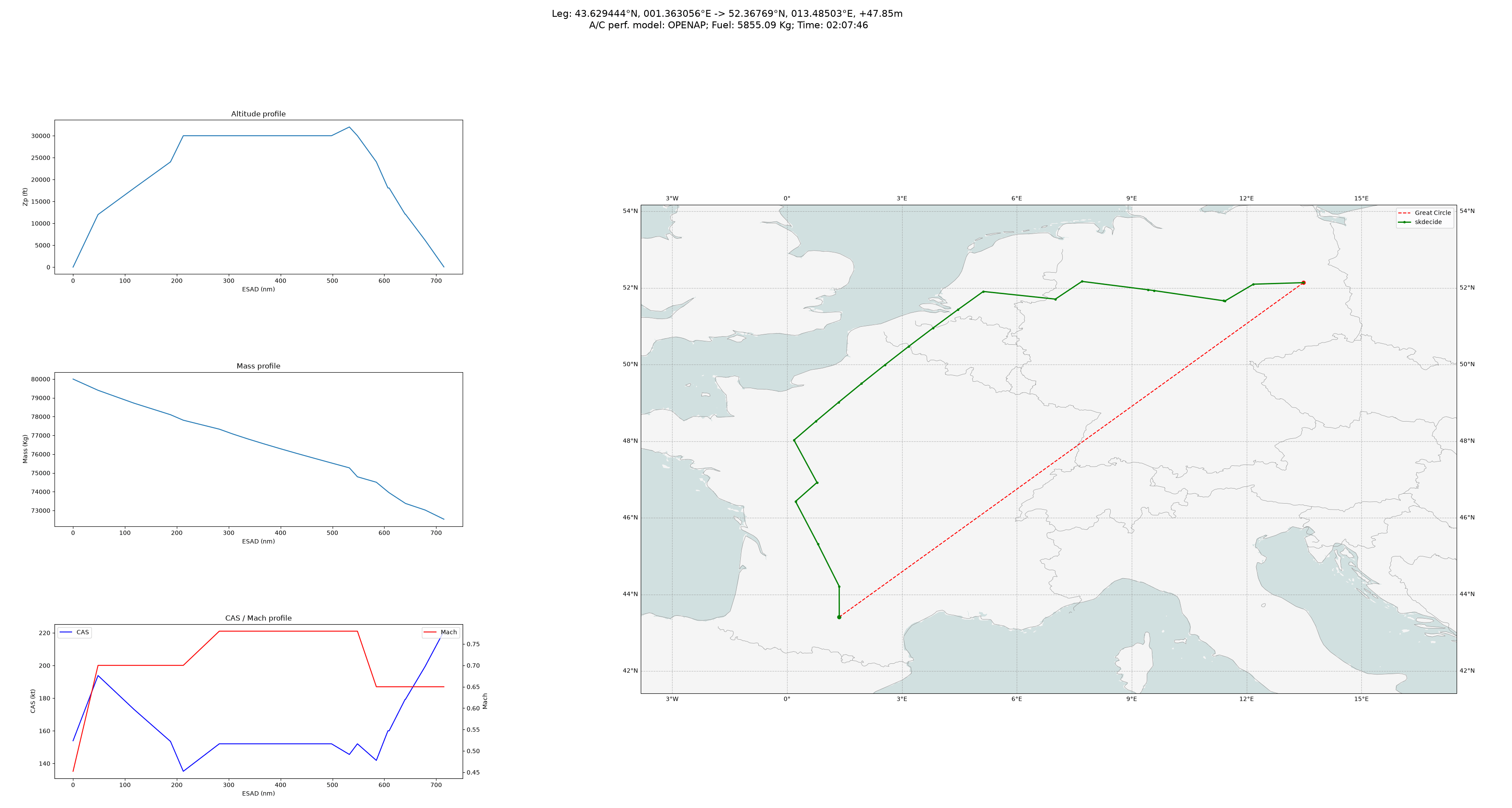
Also, you say nothing about incorporating ETOPS routing requirements into your application, and looking at the opentop source neither does it, therefore I assume this must mean this is the first time you have seen that acronym and therefore do not understand its criticality in determining aircraft routing. Might want to have your AI agent read this Wikipedia article, because your application generates many routes that are not legal to fly.
https://en.wikipedia.org/wiki/ETOPS
Should I even ask if this application routes around areas that have been declared active war zones by NOTAM?